But I remembered.
Paola sent me a message from an unknown number. She said she simply wanted to let me know that Diego had confided in her that our marriage was already on the rocks before she even came into his life.
I replied:
And you believed it because it was advantageous for you.
A month later, I learned that she was trying to sue him for the money he had given her for an apartment.
Diego had lied to him too.
He had promised me that once I had "confessed", he would keep the house and they would start over from scratch.
In his story, I was the bad guy.
In his case, I was the obstacle.
Irene laughed when she heard that.
"Men who lie often reuse the same speech."
The neighborhood took longer to return to normal.
Diego's mother, desperate to be able to return home, began to tell everyone that the babies were indeed hers.
I went from being considered unfaithful to being someone who was pitied.
I didn't like that either.
I didn't want anyone to pity me.
I wanted respect.
One day, at the store, a woman told me she was glad everything was back to normal.
I was watching her while holding a bag of rice.
"Not everything has been clarified. It has only been proven that I wasn't lying. What he did definitely happened."
She had no answer.
GOOD.
Sometimes, silence is a lesson.
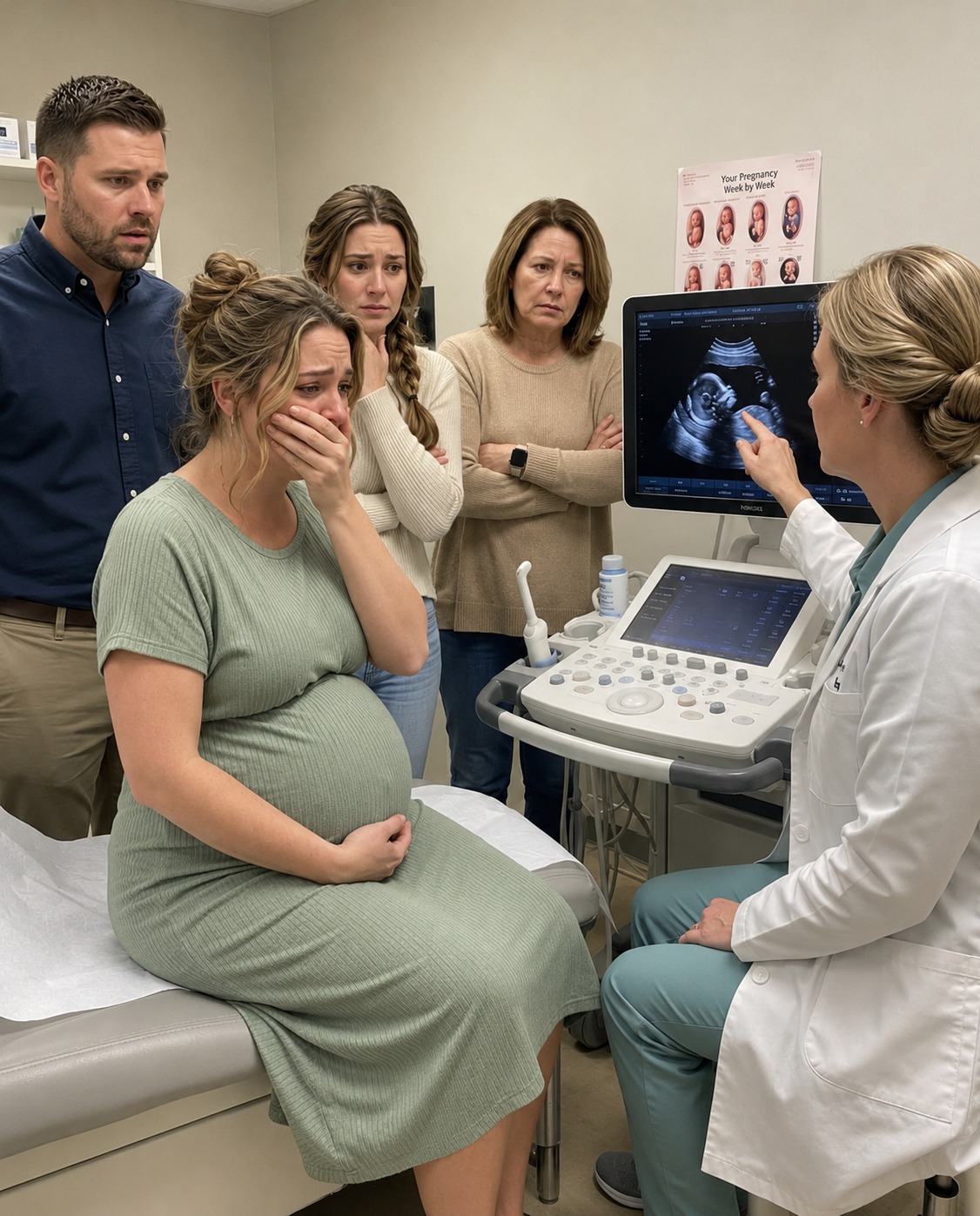
At twenty-eight weeks, the growth of one of the babies worried the doctor. I was put on almost total bed rest.
My mother came to live with me.
Diego asked for permission to help.
I said yes.
From the outside.
Grocery stores.
Medicine.
Invoices.
Transfers.
No bed.
No house.
No marriage.
One day, he came by with diapers and sweet bread. My mother opened the door.
"May I see her?" he asked.
"She can see you whenever she wants," my mother replied.
"I am her husband."
My mother laughed sharply.
"Son, you cancelled that subscription yourself."
I heard it from the bedroom and smiled for the first time in days.
The babies were born at thirty-six weeks.
A boy and a girl.
Nicolás and Emilia.
Tiny.
Wrinkled.
Angry.
Alive.
When they rose up against me, the whole world fell silent.
The accusations.
Vasectomy.
Paola.
The papers.
His gaze was fixed.
Everything has faded away.
They were the only ones.
My two miracles are exhausted.
Diego was in the waiting room. I allowed him to enter later, after I had hugged them, kissed them, and said their names.
He entered slowly, as if the room were sacred.
When he saw them, he covered his mouth.
“Laura…”
"Don't speak loudly," I said.
He nodded and walked towards the cradle.
Nicolás barely opened his eyes.
Emilia moved her mouth as if seeking comfort.
Diego cried again.
"They are perfect."
"Yes," I said. "And you will never use them to erase what you have done."
"No."
"Don't put pressure on me."
"No."
"Don't pretend to be a family like before."
That hurt him.
"So, what are we?"
I looked at my children.
I thought of the woman who saw two lines and ran, overjoyed, to announce the news. I thought of the woman who had been called unfaithful. Of the woman who was crying on the bathroom floor. Of the woman who heard two heartbeats and decided never to beg again.
"We are Nicolás and Emilia's parents," I said. "That's a lot. But it's not a marriage."
Diego closed his eyes.
He accepted it.
I didn't know if he understood or if he had no choice.
Months later, the DNA test was carried out.
Not because I needed proof.
Legally, it was useful.
And sometimes, silencing the world has its advantages.
Result: Diego was confirmed as the father of both babies.
I read the document once and then put it away.
I didn't cry.
I had already cried enough for a truth that had always belonged to me.
The divorce proceedings continued.
Slower now.
More seriously.
More accurate.
The house has been made safe for me and the children. Support has been put in place. Diego has agreed to undergo therapy if he wants to spend more time with them.
Her mother had to apologize before meeting the babies.
Unflattering public apologies.
A real one.
In my living room.
Looking at my face.
"I was cruel to you," she said.
I was holding Emilia in my arms.
“Yes,” I replied.
"I was ashamed to think that my son could be wrong."
"So you preferred to believe that I was nothing."
She cried.
"Yes."
I didn't hug her.
But I allowed her to see her grandchildren.
With limitations.
The boundaries were a form of peace I had never known before.
Diego now visits the children three times a week.
At first, he learned how to change diapers the wrong way. He discovered that Nicolás calms down with white noise and that Emilia hates socks. He understood that being a father isn't about crying during ultrasounds, but about being there on time with the bottle at 10 p.m.
Sometimes he looks at me with the sadness of a man who wishes he could turn back time.
I'm not giving him false hope.
I don't give him poison either.
Nothing but the truth.
"Do what's best for them," I told him. "With me, it's already too late."
One afternoon, while the babies were sleeping, he asked them, "Do you hate me?"
I've thought about it.
"No."
He seemed relieved.
Until I continue.
"But I don't trust you anymore. And love without trust isn't a home. It's a decorated ruin."
He had no answer.
Today, Nicolás and Emilia are one year old.
They lean on the furniture, steal each other's toys and laugh as if they were born to mock everything that tried to break us.
I work from home.
I don't sleep much.
My hair is rarely styled well.
My coffee is almost always cold.