Outside the hospital, word of the family’s tragedy spread quickly through friends, neighbors, and the local community. Messages of support poured in across social media. Churches, schools, and local organizations offered prayers and assistance. Some brought meals for waiting relatives. Others volunteered to help care for the family’s home or pets while they remained at the hospital. In moments of pain, the kindness of strangers became a source of comfort.
Friends described the young mother as someone who always helped others first. She remembered birthdays, checked in on people when they were struggling, and made everyone around her feel welcome. Hearing of her condition felt deeply unfair to those who knew her generous spirit. Many shared stories of the times she had supported them, saying they now wanted to return that love in any way possible.
As night fell, doctors delivered another cautious update. The mother remained in critical condition, but they had managed to stabilize certain complications. It was not a promise of recovery, but it was enough to lift spirits slightly. The family clung to every hopeful word, repeating it to one another as if saying it aloud could make it stronger. For a moment, exhausted faces showed the faintest signs of relief.
The father of the baby had barely left the hospital corridor since the emergency began. Torn between wanting to stay beside his partner and wanting to see his newborn child, he moved between rooms carrying a burden no one should have to bear. Witnesses described him standing silently with tears in his eyes, trying to remain strong for everyone else. He spoke little, but when he did, it was always to ask how they were doing.
He had imagined this day very differently. He thought he would be holding his partner’s hand while smiling at their baby, taking photos, and calling loved ones with joyful news. Instead, he found himself signing medical papers, listening to urgent updates, and praying for two lives at once. The contrast between expectation and reality was almost impossible to comprehend.
Throughout the next morning, doctors continued working without pause. Specialists from different departments met repeatedly to discuss treatment options. Every hour mattered. Every decision carried weight. Family members watched the doors swing open and closed, hoping each time someone entered it would bring better news. In such moments, time seemed to move both too slowly and too fast.
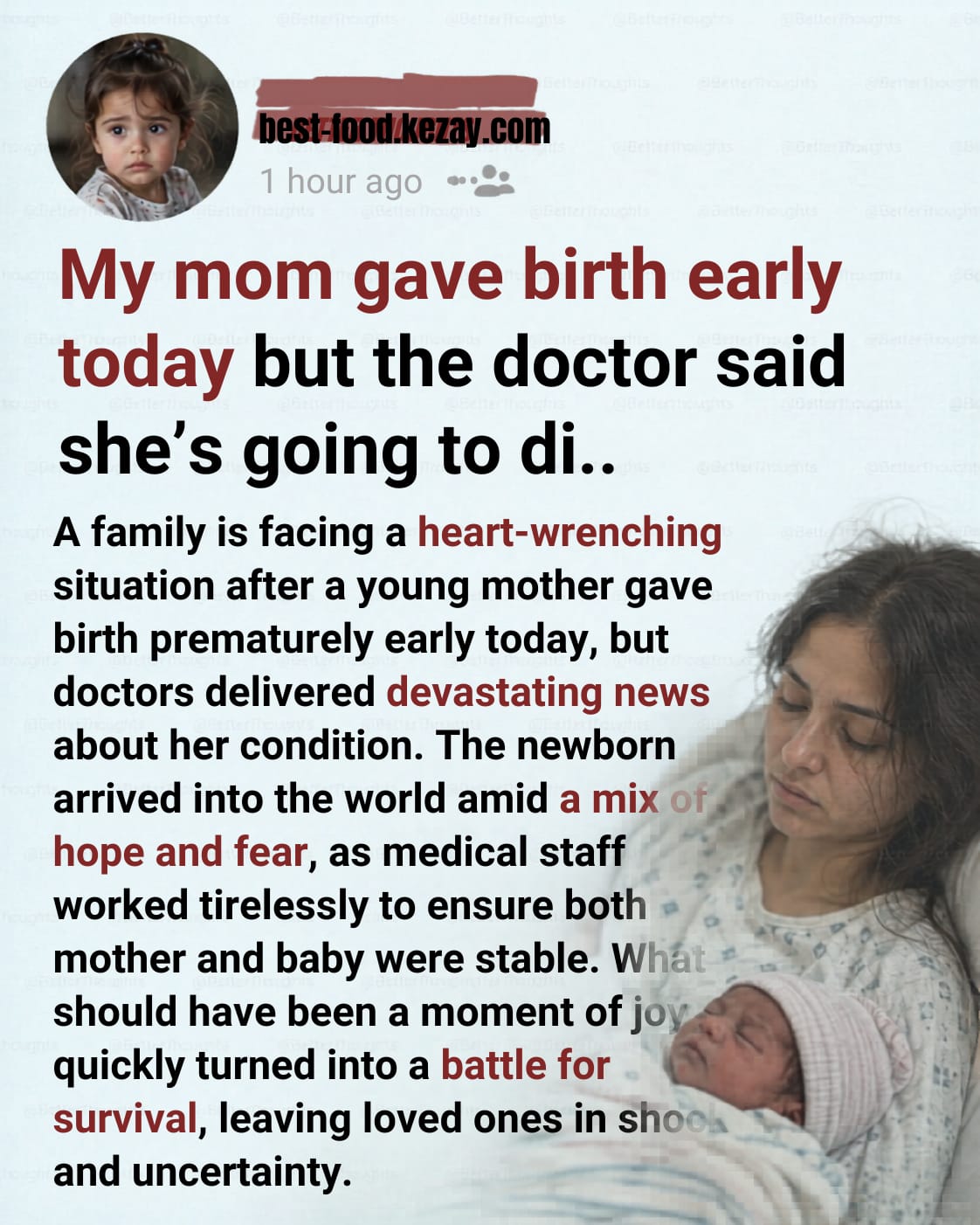
The newborn also faced challenges common to premature births: difficulty regulating body temperature, feeding concerns, and underdeveloped lungs. Yet medical staff noted signs of resilience. The baby responded to gentle touch, showed moments of steady breathing, and fought with surprising strength. Nurses often speak of the courage of premature infants, and this child appeared determined from the very beginning.
One nurse placed a tiny knitted cap on the baby’s head, donated by volunteers who make clothing for newborns in intensive care. The simple gesture touched the family deeply. In a room filled with machines and uncertainty, that small hat symbolized warmth, humanity, and hope. Sometimes the smallest acts carry the greatest meaning.
By the second day, more relatives had arrived from neighboring towns. Some sat in prayer circles. Others kept watch in hallways so no family member had to be alone. Stories were shared about the mother’s childhood, her dreams, and the excitement she felt during pregnancy. Laughter occasionally broke through the sadness when someone remembered one of her jokes. Those moments reminded everyone that even in crisis, love remains present.
Doctors eventually allowed the father to bring a recording of his voice near the baby’s incubator. He spoke softly, introducing himself and telling the child how loved they already were. He promised that no matter what happened, the baby would grow up surrounded by family, stories, and endless affection. Nurses later said the child seemed calmer hearing the familiar sound.
Then came another turning point. Physicians reported that the mother had shown a slight response to treatment. It was small, and they warned against expecting too much too soon, but it was real. The room that had felt so heavy with dread suddenly filled with renewed energy. Tears flowed again, this time mixed with hope.
The family knew recovery, if it came, would likely be long and difficult. There could be surgeries, rehabilitation, and months of healing. The baby might also require extended care before being strong enough to go home. Yet compared to the fear of losing them, those future challenges felt manageable. Hope changes the weight of hardship.
As the story continued to spread, many people reflected on how suddenly life can change. A normal morning can become an emergency by afternoon. Joy can stand beside grief in the same room. Yet people also saw another truth: in the darkest moments, compassion often shines brightest. Neighbors who barely knew the family stepped forward. Medical workers gave everything they had. Loved ones refused to leave each other’s side.
For now, the mother remains under close observation, and the newborn continues receiving specialized care. The road ahead is uncertain, and no one can predict exactly how the coming days will unfold. But the family continues to hold on—to faith, to each other, and to every sign of progress.
They have learned that miracles do not always arrive as dramatic moments. Sometimes miracles come quietly: a stable heartbeat, a deeper breath, a doctor’s cautious smile, a tiny hand curling around a finger. Sometimes miracles are simply one more hour, one more chance, one more sunrise.
Whatever happens next, this family’s story has already touched countless hearts. It is a story of fear, resilience, and love tested in unimaginable ways. It is the story of a mother fighting to stay, a newborn fighting to begin, and a family refusing to give up on either one.